restorative dentistry
Dental implants vs. bridges: how to choose
Both replace a missing tooth. Here's what actually separates them, for your bite, your other teeth, and how the decision gets made.
March 2, 2026 · 6 min read
A missing tooth doesn't stay a one-tooth problem for long. Neighboring teeth drift into the gap, the bite shifts, and bone in the jaw begins to thin without a root there to stimulate it. Both implants and bridges stop that drift and restore the bite. The difference is in how they do it.
How a bridge works
A bridge fills the gap using the teeth on either side of it for support. Those teeth are shaped to hold a fixed restoration that spans the missing one. It's a well-established, predictable option, and because it doesn't involve a surgical placement, treatment is typically completed in fewer visits. The tradeoff is that it relies on healthy neighboring teeth, which are altered permanently to support it.
How an implant works
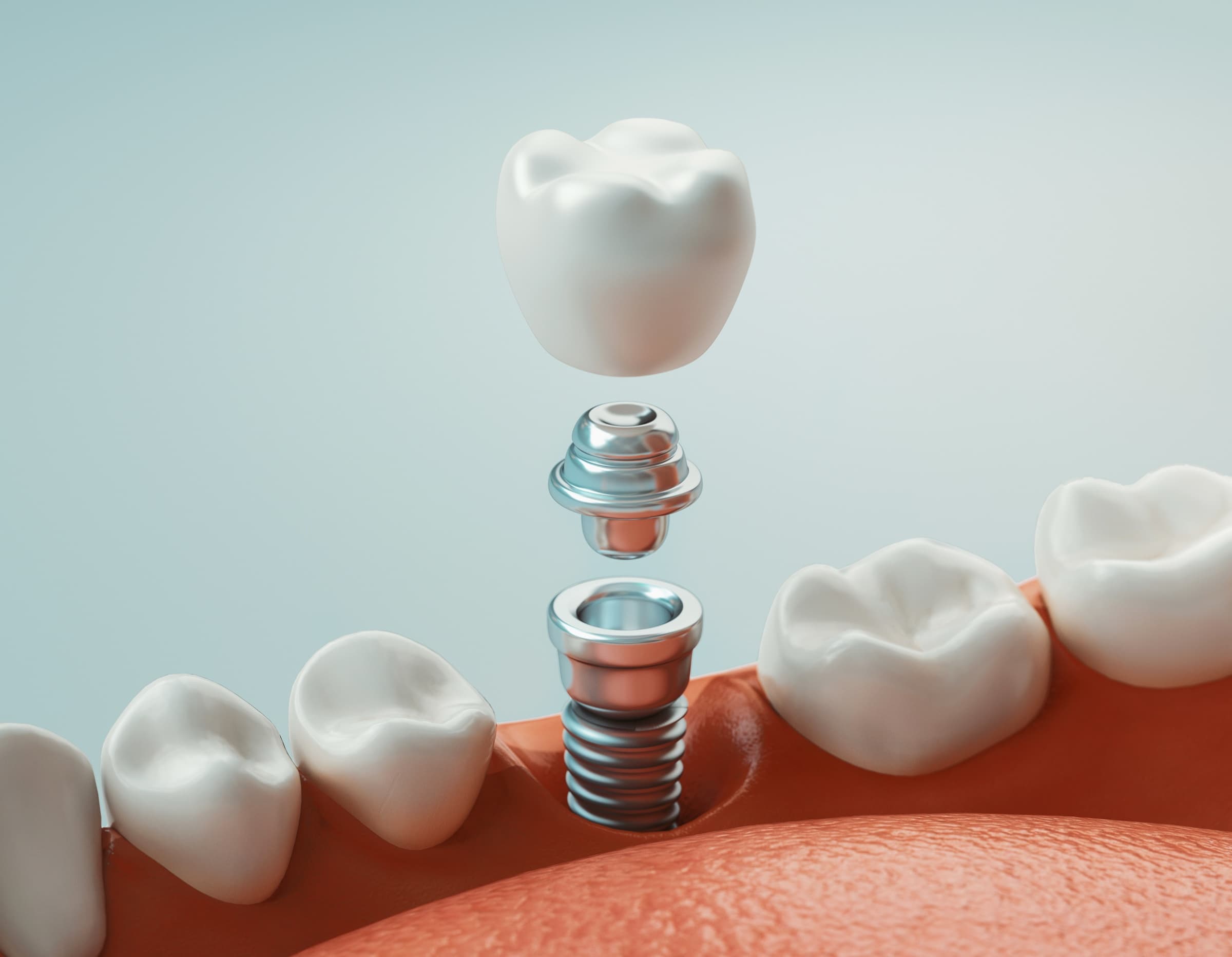
An implant replaces the root itself: a titanium post placed in the jaw, topped with a custom crown once it has integrated. Nothing is done to the neighboring teeth. Because the post is planned from a 3D scan and placed through a custom surgical guide, the position is mapped before anything happens, and the result is meant to disappear among your other teeth entirely. It also stimulates the jawbone the way a natural root does, which a bridge can't do.
What the decision actually turns on
In practice, the choice usually comes down to three things: the condition of the teeth next to the gap, how much bone is present at the site, and how many teeth need replacing. A single missing tooth with strong, healthy neighbors and enough bone is often the clearest case for an implant. Multiple adjacent missing teeth, thin bone that would need grafting first, or a patient who'd rather avoid a surgical step are all situations where a bridge is worth discussing, or an implant-supported bridge, which combines both approaches.
There's no version of this decision that should be made from a price list alone. It's made from a scan, an exam, and a conversation about what the tooth needs to do for the next twenty years, not just the next two.
ready to begin
Ready to come in?
Book online or call, and we'll take it from there.