sedation dentistry
What we do for patients who are afraid of the dentist
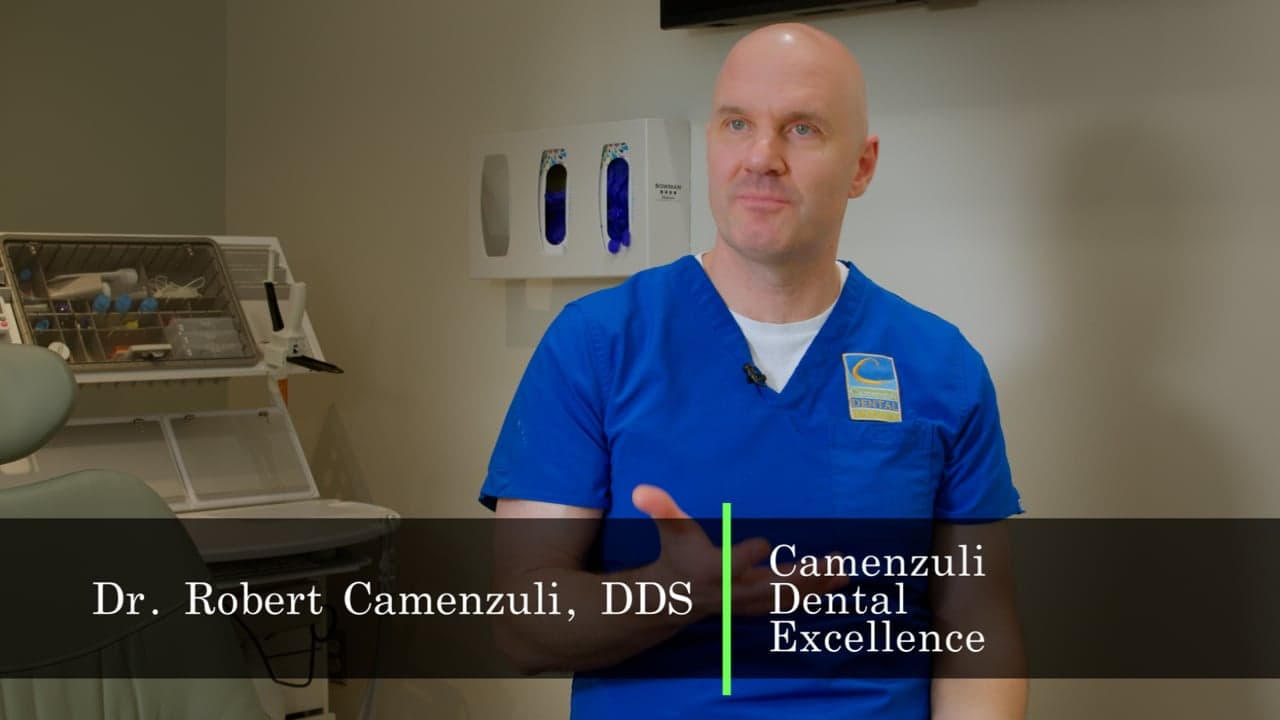
Dr. Camenzuli on his mother’s fear of the dentist, the comfort measures that still let you drive yourself home, and what IV sedation actually feels like.
October 13, 2026 · 5 min read
Reviewed by Dr. Robert A. Camenzuli, DDS on October 13, 2026
There is a range rather than one answer. It begins with sunglasses, noise cancelling headphones and a vibration device that takes your attention off the injection. Nitrous oxide clears your system in about five minutes, so you can still drive home. IV sedation goes deepest. If you cannot get through the door at all, the first appointment can happen over the phone.
“Being able to help an anxious patient, it’s my pride,” Dr. Camenzuli says. “I feel proud that I’m able to help them.” The reason sits close to home.
His mother grew up without access to a dentist, and avoided going out of fear. “It was told to them that don’t go to the dentist because they’re going to hurt you, and they didn’t actually use anesthesia when she was a child. So she has very traumatic experiences.”
He went on to treat her himself and placed implants for her. Watching her stop being afraid changed how he understood his own work. “I’m blessed to have this gift that I can help patients feel comfortable. I can help them be less anxious.”
It does not have to start with sedation
An anxious patient does not automatically need to be sedated, and the first measures he reaches for are deliberately ordinary. “Just using simple things like using sunglasses to block out the light, noise cancelling headphones.”
He also uses a vibration distraction device, which the patient holds next to the jaw or on the collarbone. While they are being numbed, their attention goes there instead, “and that helps them stay calm and relaxed.”
Nitrous oxide, if you need to drive yourself home
“Using nitrous oxide allows them to drive home because after five minutes of breathing 100% oxygen, it’s out of your system.”
If you cannot get through the door
Some patients cannot make it into the building at all. For them, the first appointment happens on the phone. He takes a medical history and learns who they are, then prescribes medication by mouth, in his words, “just to get them into the office.”
The examination happens that day. What treatment they need, and whether IV sedation makes sense, is a conversation for a later visit.
What IV sedation actually is
The worry he hears most is about being put under. “Patients who are apprehensive about having IV because they’re worried they don’t want to be out. They don’t want to be on their anesthesia.”
“Well, it’s not anesthesia and you’re not asleep, because you’re able to breathe on your own. And with firm verbal stimuli, you can still answer questions. It may be slow to respond. So it’s a moderate level of sedation. And that is a very comfortable place to be for dentistry.”
What does go is the memory of it. “You have no concept of time. There’s an amnesia effect, so you don’t remember the procedure.”
He prefers it to pills for one reason above the rest, which is control. “Being able to control a patient’s depth of sedation by using IV is much safer than using oral pills, and it’s reversible with medications as well.”
He also says the benefit does not stop when the appointment does. “Because your body is more relaxed, you’re less inflamed, and you recover better after as well.”
ready to begin
Ready to come in?
Book online or call, and we'll take it from there.