dental implants
Dental implants are about function first
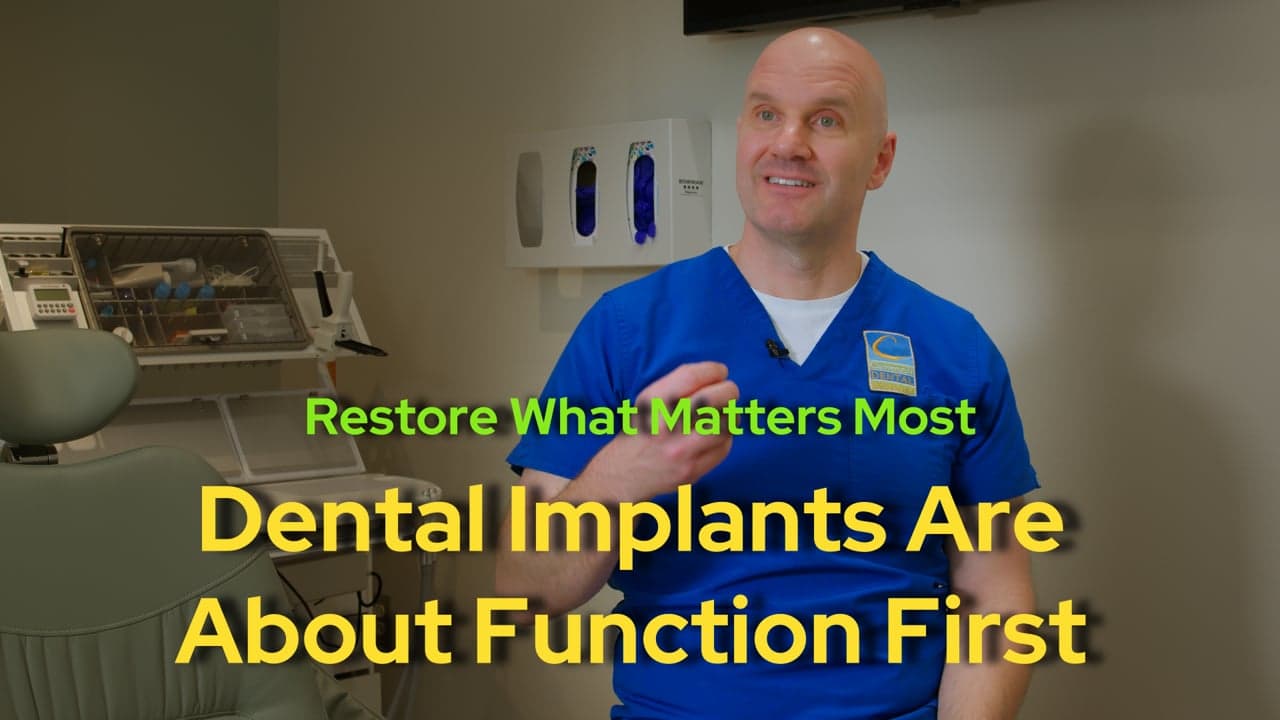
Dr. Camenzuli on why most patients come to him for chewing and speaking rather than looks, and how placing the implant the same day the tooth comes out cuts months off the wait.
October 13, 2026 · 4 min read
Reviewed by Dr. Robert A. Camenzuli, DDS on October 13, 2026
Most people who ask about dental implants are not chasing a better smile. They want to chew comfortably and speak naturally again. At Camenzuli Dental Excellence the implant is placed the same day the tooth is removed, which brings the wait for the new tooth down from six to nine months to about three or four.
When patients come to Dr. Camenzuli about implants, the reason is usually simpler than they expect. “A lot of patients are motivated to get implants when they’re missing teeth because they miss the function of their teeth,” he says. Appearance matters when the gap falls in the smiling zone, but function is what brings most people through the door.
“Being able to chew their food comfortably, being able to speak naturally, those are very important functions for basic human living.”
One tooth, or a whole jaw
The same approach scales. A single tooth can be replaced, and so can a full lower or upper jaw, restored on four or six implants.
Of all the ways to replace a missing tooth, he rates implants highest for how close they come to the real thing. “Out of all the prosthetics out there, it’s the most lifelike and naturally functioning than any other prosthetic, if you think about it. So I feel privileged to be able to offer that to my patients.”
Placing the implant the same day the tooth comes out
This is where his approach differs from how implants are usually done. “I can take a patient who has a tooth that has to be gone and there’s nothing else we can do with the tooth. We can remove that tooth. We can place the implant the same day.”
He then makes a custom healing abutment, a cap that covers the socket the tooth came out of. “Biology happens underneath that cap,” he says. The bone remodels underneath and integrates with the implant.
About three to four months later, the work of making the new tooth can begin. “Traditionally, we had to wait six months to nine months before we could put another tooth. So we’re cutting the time in half.”
He mentions one patient who had come back to tell him how it went. The man called them magicians, because he had no pain afterwards.
You will not always know you need one
“Sometimes you don’t know you need an implant until we’ve exhausted all options to restore that tooth,” he says. A tooth can be past saving because of something like a fracture in the root, with nothing left to build on.
Pain is not a reliable guide either. “Sometimes you’re in pain when you need an implant and sometimes there’s no pain. There’s a lot of dental problems that are silent and can give you a false sense of security.”
He hears the reasoning often enough to quote it back: “Well, I don’t need to see the dentist. I don’t have any pain. I’m fine.” Those are the problems that turn up on a routine examination instead, at six month visits with x-rays, where a cracked tooth can be found before it makes the decision for you.
ready to begin
Ready to come in?
Book online or call, and we'll take it from there.